Almost everyone feels anxious sometimes — before an exam, a job interview, or a difficult conversation. But for millions of people, anxiety isn’t an occasional visitor. It’s a near-constant presence that shapes how they think, sleep, and move through the world. Understanding what anxiety actually is, why it happens, and what genuinely helps can make an enormous difference in how manageable it feels.

What Is Anxiety, Really?
At its core, anxiety is your body’s alarm system. It evolved to keep our ancestors alive by triggering a rapid physical response to danger — faster heartbeat, tense muscles, heightened alertness. The problem is that this same system can activate in response to modern stressors that aren’t life-threatening: an overflowing inbox, a social gathering, or an uncertain future. When the alarm goes off too often, or too intensely, it starts to interfere with daily life rather than protect it.
Common Causes of Anxiety
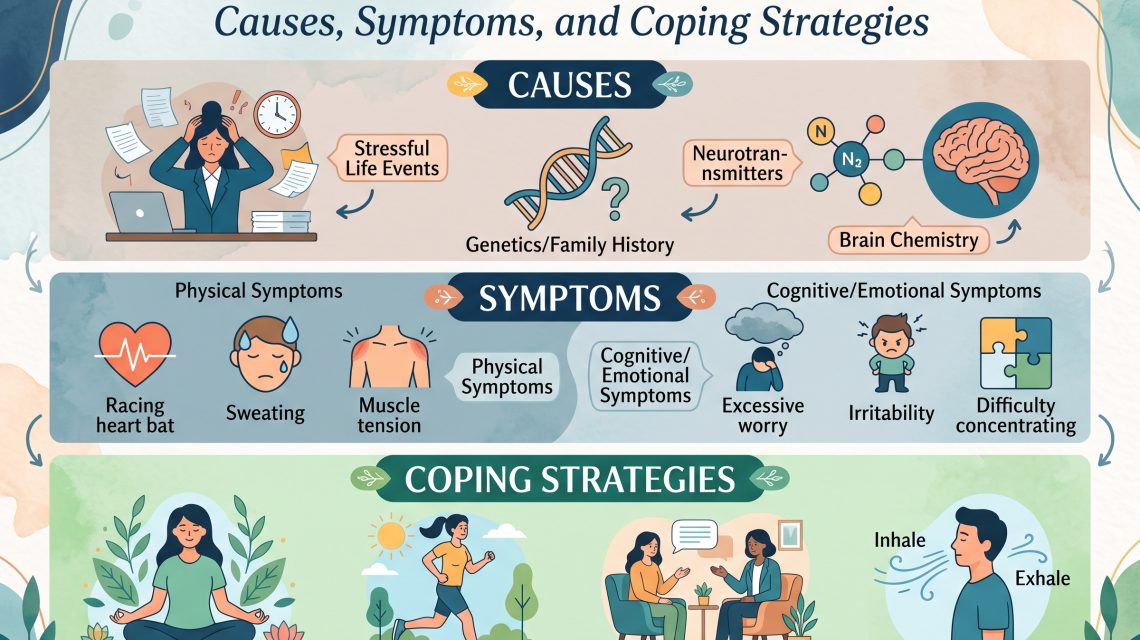
Anxiety rarely has a single cause. It usually develops from a combination of factors, including:
- Genetics and temperament: Some people are biologically more sensitive to stress than others.
- Chronic stress: Long-term pressure from work, finances, or relationships can wear down your ability to cope.
- Past experiences: Trauma or repeated negative experiences can train the brain to expect threat.
- Lifestyle factors: Poor sleep, excessive caffeine, and lack of physical activity can all amplify anxious feelings.
- Thinking patterns: Habits like catastrophizing or overestimating danger keep the anxiety cycle going.
Recognizing the Symptoms
Anxiety shows up differently for everyone, but common signs include a racing heart, tight chest, restlessness, difficulty concentrating, irritability, muscle tension, and a persistent sense that something bad is about to happen. Physical symptoms are just as real as emotional ones — anxiety is not “just in your head.”

Practical Ways to Cope With Anxiety
1. Practice Slow, Controlled Breathing
When anxiety spikes, your breathing becomes shallow and fast, which reinforces the panic response. Slowing your breath — inhaling for four counts, holding for four, exhaling for six — sends a signal to your nervous system that it’s safe to calm down.
2. Challenge Anxious Thoughts
Anxiety often exaggerates the likelihood and severity of bad outcomes. Try writing down the anxious thought, then asking: Is this actually likely? What would I tell a friend who thought this? This simple exercise, borrowed from cognitive behavioral therapy, can loosen anxiety’s grip over time.
3. Limit Stimulants
Caffeine and nicotine can mimic and intensify physical anxiety symptoms. Reducing intake, especially later in the day, often brings noticeable relief.
4. Move Your Body
Physical activity burns off excess adrenaline and cortisol, the hormones behind the anxiety response. Even a 20-minute walk can measurably lower anxious tension.
5. Build a Wind-Down Routine
Anxiety and poor sleep feed each other. Learn more about this connection in our guide on sleep and mental health, and consider pairing it with the mindfulness meditation practices we cover separately.
When to Seek Professional Support
If anxiety is interfering with your work, relationships, or ability to function day to day, it’s worth speaking to a licensed therapist or doctor. Anxiety disorders are highly treatable, and support such as cognitive behavioral therapy or, when appropriate, medication can help people regain a sense of control far faster than trying to manage it alone.

Final Thoughts
Anxiety can feel isolating, but it is one of the most common and well-understood mental health experiences there is. With the right combination of self-awareness, small daily habits, and professional support when needed, it is entirely possible to feel steadier and more in control — even if the anxious thoughts never disappear completely.
